By Sophia Benavente
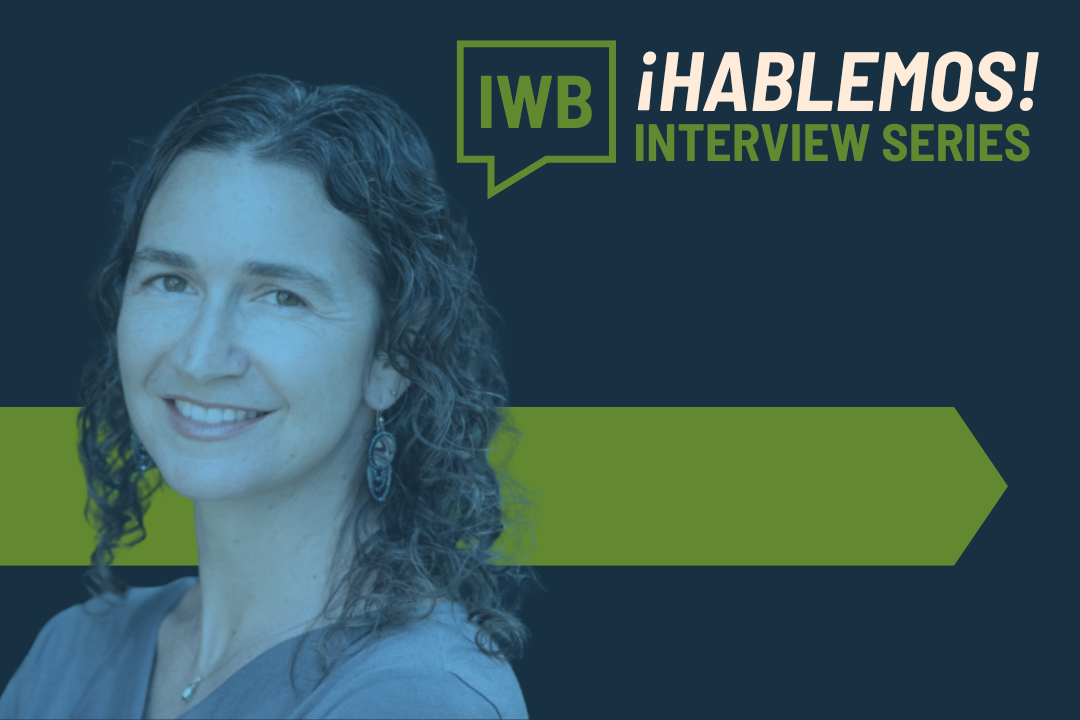
Dr. Mneesha Gellman is an Associate Professor at Emerson College and is the Founder and Director of the Emerson Prison Initiative. She is an expert on comparative democratization, cultural resilience, the politics of memory and violence, and education policy in the Global South and the United States. Dr. Gellman is a Scholar Affiliate of the Im/migrant Well-Being Scholar Collaborative (“The Collaborative”). The Collaborative interviewed Dr. Gellman in July 2025 to discuss her work on im/migration and human rights, her role as an expert witness, her founding of the Emerson Prison Initiative, and her innovative research on the exclusion of certain groups in history textbooks.
Im/migration and Human Rights Expertise
“There are a lot of ways to live and be in the world,” says Dr. Gellman, whose mantra perfectly illustrates how she has approached her career. Her global perspective has informed the work she does both as an academic and an activist, as well as her timely scholarship on the human rights conditions in El Salvador and Mexico.
First as a college student and later as a researcher, Dr. Gellman began exploring how social contracts, like citizenship, function internationally. Her work on citizenship in El Salvador uses questions about the rights and responsibilities of citizens and authorities, emergency services, and education to explore these themes, which are central to one of her books, Democratization and Memories of Violence. Dr. Gellman’s research highlights nuances in the experiences of migrants, that are largely missed by immigration judges, Department of Homeland Security (DHS) attorneys, and the broader public.
In March 2025, Dr. Gellman co-authored a piece for The Conversation on the human rights conditions in El Salvador’s mega prison, CECOT. The facility gained infamy after people residing in the US were deported there and has come to symbolize the growing criminalization of im/migrants as deportations have continued to rise. Dr. Gellman shared her worry over how people in the U.S. are becoming acclimated and desensitized to mass deportation. As she put it, “Part of this can be attributed to Americans’ limited understanding of the reasons people need to, or choose to, leave their countries of origin.” The narrative that people immigrate to the U.S., “just for the heck of it,” is a complete mischaracterization of what it means to be an im/migrant. As Dr. Gellman’s research has shown, people often flee their home countries due to violence, political prosecution, poverty, and lack of other essential resources.
Dr. Gellman noted that although most Americans have a connection to immigration, much of the country is forgetting its history. Dr. Gellman shared her own experiences as a 3rd generation American and stressed the importance of remembering one’s own family story and what brought them to the U.S.
Experience as an Expert Witness
In an effort to translate her research expertise into action, Dr. Gellman has also testified as an expert witness for asylum hearings in immigration courts since 2016. She has been an expert witness on over 130 cases, two-thirds of which have pertained to im/migrants from El Salvador. She works with attorneys across the United States. Thanks to online platforms like Webex, she is able to work with attorneys from across the U.S. Most recently, she has started to train other scholars on how to serve as an expert witness, which she says is a valuable way to use an academic and methodical skillset.
Dr. Gellman noted that although focusing on one case can appear insignificant, the work is just as important as large-scale initiatives. Moreover, being an expert witness provides insight into international political systems and gives a voice to so many individuals. The cases are often challenging. While there is little conversation on the effects of secondary trauma and the risk of burnout, the work can be just as moving as it can be painful. For Dr. Gellman, it is important as a publicly engaged scholar to practice small rituals that protect her own well-being.
The Emerson Prison Initiative
In addition to her work on human rights and immigration, Dr. Gellman is also the founder and director of The Emerson Prison Initiative, which she says is a big part of her day-to-day activities. In her research on prisons and detention systems around the world, she carefully examines how people are treated, especially with regards to factors such as immigration status or language barriers.
Her work asks important questions, such as what rights individuals should have when detained, who gets to feel safe, and when punishment is considered fair. She also examines how unequal access to resources shapes these experiences—whether through disparities in access to immigration attorneys, financial stability, or networks of support.
Reclaiming History
A common denominator in these cases is the influence of social and historical contexts. In her most recent book, Misrepresentation and Silence in United States History Textbooks, Dr. Gellman focuses on the misrepresentation and silencing taking place throughout U.S. history textbooks with a focus on Native and Mexican Americans. Unfortunately, she sees a continued practice of lifting up White supremacy, which continues to be infused in higher academia.
Dr. Gellman argues that misinformation around historical narratives dominate everything from textbooks to social media spaces. “Such misinformation then feeds the negative assumptions people make,” shared Dr. Gellman. This rhetoric begins as early as elementary education through misconceptions, such as the myth that white Europeans discovered America or that Thanksgiving was an amicable gathering between colonizers and Native Americans. In middle and high school, there is minimal, if any, discussion of things such as the Chicano rights movement or contemporary migrant communities. Students do not know the real stories of the roots of gangs such as MS-13, or the Guatemalan civil war sparked by the United States invention of the United Fruit Company.
If and when students pursue higher education, the classes they take can either reinforce these narratives or open minds. As a college professor, she attempts to change this, by analyzing history textbooks and identifying patterns of intentional silencing. Dr. Gellman says that we must address the way stories are told, despite the fact that current conditions make it difficult to do so. In reference to the current threats to the Department of Education, she reiterates that institutions, faculty, staff, and students must adapt to preserve and expand current efforts to promote cultural sensitivity and competence in both academic and social spaces.
Dr. Gellman speaks to her students across disciplines, such as those who study TV and filmmaking. Some students are unaware of the history or the present, but many come away from classes feeling compelled to implement her teachings in the projects they aspire to work on.
What’s Next
At the heart of Dr. Gellman’s work is her belief that everyone has the capacity to be kind. She thinks everyone can try to implement the values they hold dear to themselves into their relationships with others. The current systems are designed to dehumanize others and make them feel inadequate, yet actions such as participating in culturally meaningful activities, are ways that the everyday citizen can resist.
While she would like to send a message of hope and understanding for im/migrant families who are navigating the immigration system and the trauma of separation and detention, Dr. Gellman also emphasized the importance of thinking realistically and pragmatically. She stressed the value of learning about resources and reading guides relevant to deportation, and thanks the volunteers who support those in need.
“In a democracy, citizens make the choices that shape the politics in which they exist,” Dr. Gellman implores everyone – from leaders to community members – to be vocal about the issues they care about. “We have a voice in our government,” Dr. Gellman says, and indeed, it is the voice of academics like Dr. Gellman that help drive change.