By Rick Tzompa Chimal
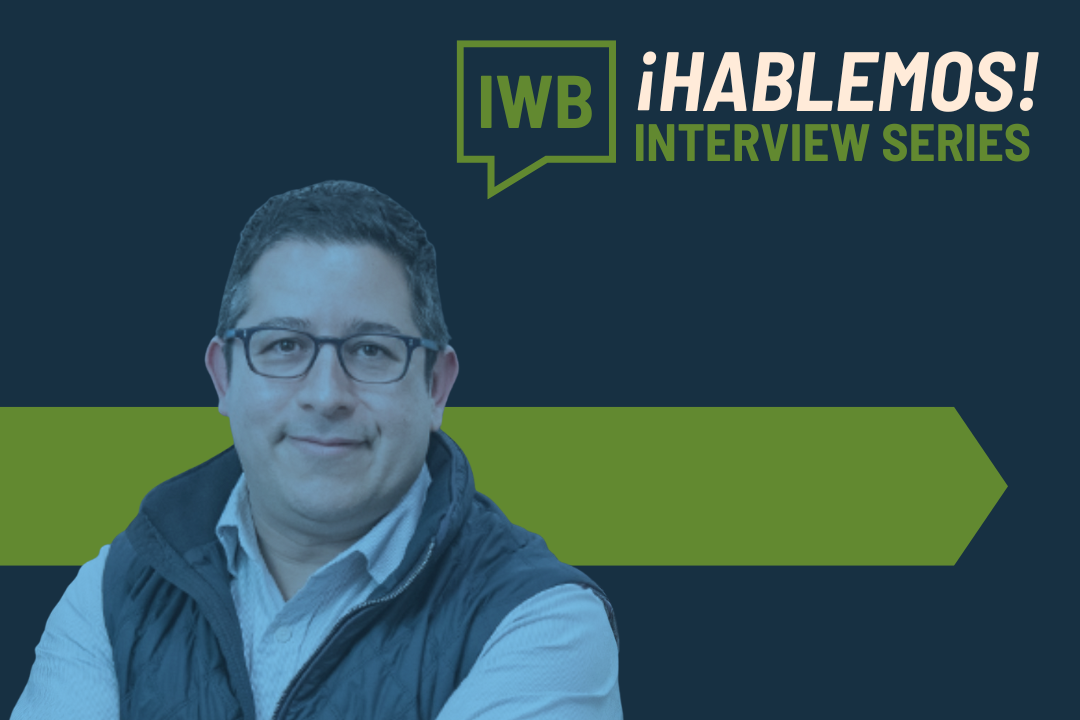
Dr. Ernesto Castañeda is Professor of Sociology and Director of both the Center for Latin American and Latino Studies and the Immigration Lab at American University, where he investigates how immigration, urban life, and inequality shape contemporary societies. His extensive research and award-winning books including Immigration Realities: Challenging Common Misperceptions, A Place to Call Home, and Building Walls explore immigrant integration and exclusion across the United States and Europe. His research reveals how policies and social structures affect marginalized communities.
A prolific public scholar, Dr. Castañeda blends rigorous sociological analysis with accessible public engagement to inform policy debates, uplift immigrant voices, and deepen public understanding of migration’s impacts on cities, families, and democracy. He exemplifies the power of research translation for publicly engaged scholarship through his efforts to make his scholarship accessible to Spanish-speaking and non-expert audiences.
Dr. Castañeda is a Scholar Affiliate of the Im/migrant Well-Being Scholar Collaborative (“The Collaborative”). We interviewed Dr. Castañeda in November 2025 to discuss his research on im/migration and im/migrant communities, his sociological approach, his recent publications, and his continuing work.
Understanding the Realities of Immigrants in the U.S.
There are many misconceptions about the lives of immigrants, especially in the United States. Dr. Castañeda reminds us the country is built on the work of immigrants. Because immigration is so politicized, many scholars including himself, write books and author publications to inform the public about immigration topics rooted in empirical research to dispel myths. He reflected that one of his favorite parts about working in this discipline was the sense of community he feels amongst his peers.
He believes his work is more relevant today than ever because the American public has often not been told the reality about immigrants by the media. His goal is to reach as many people as will listen: students, reporters, and the public.
He uses his research to demonstrate that, contrary to false information that can be perpetuated by agitators, politicians, and then the media, “most immigrants do not commit crimes, most immigrants work, and to be undocumented does not mean that someone is a bad person.” He uses his body of research and digital platforms to talk to people because he feels there can be an over-reliance on the news instead of experts and those with lived experience when discussing what immigration really looks like in the U.S.
Fighting Misperceptions through Research
In his 2024 book, Immigration Realities: Challenging Common Misconceptions, Dr. Castañeda argues that the Trump administration has used misunderstandings and myths about immigrants as a justification for its immigration agenda. He argues that while many of these narratives are demonstrably false, the administration’s narratives have a large, negative impact on the public perception of immigrants.
His argues in his book based on his empirical research that “border walls do not work to prevent migrants from crossing the Mexico-U.S. border.” Rather, they “are dangerous and create challenges in particular for women, LGBTQ+ individuals, and those undocumented individuals escaping from violence.”
Another misconception is that remittances are a way for immigrants to take their wealth outside the U.S., but in reality, ”only 17.5% of immigrants’ income goes to remittances.” With the majority or 82.5% of their wages staying in the U.S., which is only a portion of their overall contribution to the U.S. economy.
Regarding the economy, Dr. Castañeda says immigrants tend to benefit employers the most, allowing employers to find labor in construction and service fields. Though, he notes harsh policies can reduce the ability of employers to complete their sites or run their services.
Misconceptions in Media and the Importance of an Online Presence to Inform Public Debates
Dr. Castañeda argues that information needs to be made available and accessible to the general public to ensure they are aware of the truth about immigration and immigrants in the US. This can be accomplished through the choice of language and its simplicity: trading jargon for terms non-experts can understand. It is also critical for research to be translated from English to Spanish and vice versa.
It can be difficult for academics to speak to the media, given that by necessity segments are short and leave details unexplored, but Dr. Castañeda finds that answering questions from journalists reaches broader audiences who may need to hear about his research. He says he gets better at explaining the complexities of immigration in a consistent and brief manner with every interview.
Today, immigration policy is based on political calculations, public opinion, and public debates. While every government official may not be listening, their staffers and policy writers are, making his voice influential when explaining the realities of immigration. Dr. Castañeda says, “researchers and those with evidence must be part of the discussion on policymaking, because they bring their research and data to inform policy rooted in fact not fiction.”
He thinks social media is a place where people can be reached to change their views on immigration. Dr. Castañeda finds the Im/migrant Well-Being Scholar Collaborative and other important work that is authoritative and trusted are needed online to push research forward to inform public opinion.
Mentoring Emerging Scholars and Advancing Migration Research at the Immigration Lab
Dr. Castañeda is the Director of the Immigration Lab at American University. The Immigration Lab conducts research on topics of migration including: immigration, emigration, transnationalism, integration, and categorical inequality, among other topics. In this role, he co-authors publications and works with students in the lab on research related to immigration and policy.
Some recent relevant work is a project interviewing immigrants who have arrived to the DC, Maryland, and Virginia area and New York City following the pandemic. The project compares the experiences across these groups, with a particular emphasis on the impacts of lifting Title 42.
Another example of the Lab’s related research finds that there was a spike in authorized immigration during the Biden administration, but suggests there was a bottleneck given unique circumstances due to the pandemic and Title 42. This spike was followed by a misconception that a rise of unauthorized immigration would continue at a similar rate long after his presidency.
When looking at the future of the continued immigration crackdown, Dr. Castañeda says, “it will not necessarily get worse than today, but it is up to policymakers and if they are open to using data-driven reasoning, public opinion, and the fears that got us here.” In the short-term, he believes it will take several years to reverse the harm caused by these policies. Even if Democrats win back many seats during the midterm elections, the Trump administration will probably attempt to stop rollbacks to its policies.
Engaging with the Collaborative
Dr. Castañeda values The Collaborative for its commitment to making research accessible to policymakers, community members, and immigrant-serving professionals—especially those from immigrant backgrounds who can use this knowledge to advance in their fields. Working with others who are finding similar results from research projects strengthens the collective voice, helps highlight the experiences of women and marginalized groups, and supports evidence-based recommendations for policy change. He believes “academics must learn to speak to the public because research only has impact when it is communicated clearly and responsibly to a broader audience.”
How to Remain Hopeful and Forthcoming Research
Dr. Castañeda reminds new scholars that the country has faced anti-immigrant cycles before, and that most Americans remain empathetic, with only a minority holding explicitly xenophobic views. Although “the current moment feels harsh,” he says, “people are increasingly recognizing the real-world consequences of harmful policies, which makes empirical research more important and valuable than ever.” He encourages scholars not to silence themselves, as speaking up responsibly protects free expression and ensures truth is not crowded out by disinformation.
He also believes immigrant well-being is inseparable from the well-being of all Americans, arguing that attacking immigrants ultimately harms the nation’s own social and economic health. Looking ahead, his work will continue to examine immigrant integration, transnational movements, and the impacts of exclusionary policies in cities like D.C. and New York. His broader hope is for a more inclusive, democratic society where essential workers are valued, younger generations have a stronger voice, and the country recognizes how deeply connected its communities truly are.
Thank you for reading IWB ¡Hablemos!, an interview series that explores the multifaceted nature of immigration studies, advocacy, partnership, and more. Interested in being featured? Email us at admin@iwbcollab.org.