By Sophia Benavente
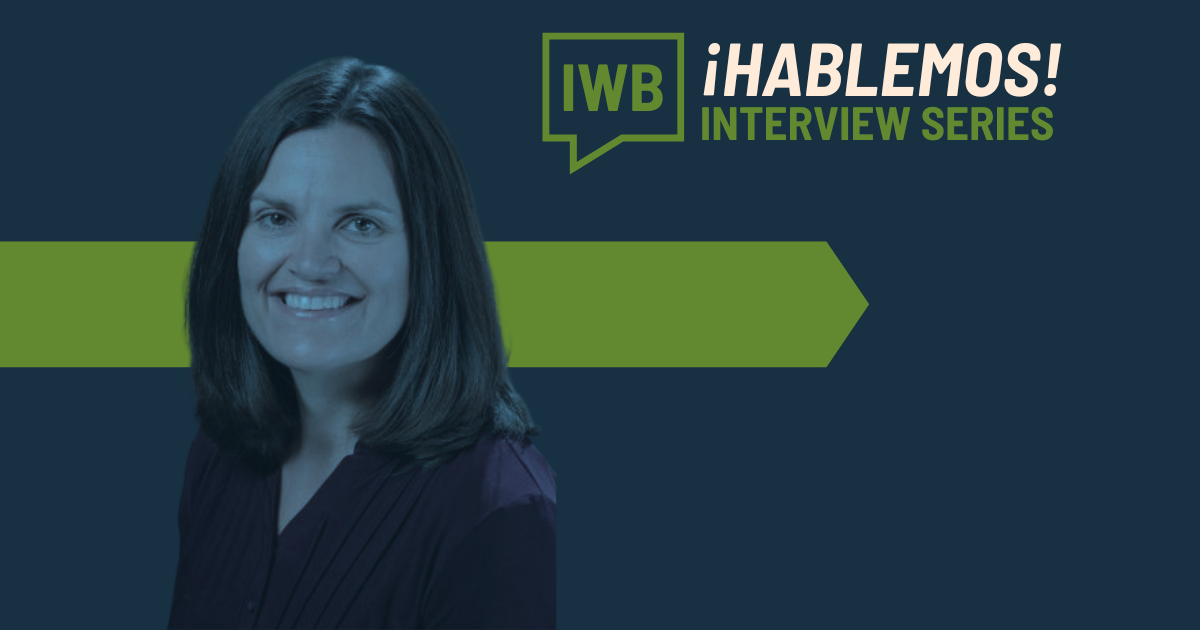
Dr. Christina M. Getrich is a sociocultural and medical anthropologist whose research examines the health, well-being, and incorporation of immigrants in the United States. Dr. Getrich serves an associate professor and director of graduate studies in the Department of Anthropology at the University of Maryland, as well as a scholar affiliate of the Im/migrant Well-Being Scholar Collaborative (“the Collaborative”). The Collaborative interviewed Dr. Getrich last month on her work at the intersection of immigration and anthropology as well as her new book, Everyday Activists: Undocumented Immigrants’ Quest for Justice and Well-Being.
Dr. Getrich began studying Deferred Action for Childhood Arrivals (DACA) recipients and their unique contributions to the healthcare field through her research on what makes community healthcare effective. This was largely driven by the Covid-19 pandemic, which exposed significant gaps in the American healthcare system. In particular, Dr. Getrich found that DACA recipients were providing a crucial role during a time of high need but a noted shortage of healthcare workers. What’s more Dr. Getrich found that DACA recipients contributed relevant skills such as linguistic and cultural competency, rooted in their families’ struggles navigating the healthcare system, that helped eliminate barriers to healthcare access for many groups. Based on these insights, Dr. Getrich argues that if DACA were to be rescinded again as it was in 2017, it could mean disaster for our health care system, as well as many other frontline professional fields, such as education.
The threat of rescinding DACA also disrupts the lives of American families. Since the program was introduced by executive order under the Obama administration in 2012, roughly forty-four percent of DACA recipients have married and have at least one child. Despite their community roots and the fact that many of them are raising American citizens, DACA recipients’ futures are placed in jeopardy by congressional inaction on a pathway to citizenship. Dr. Getrich elaborates: “Many DACA recipients have deeply established lives in America, with many of them losing work authorization and being vulnerable to deportation. This lack of ability to work can be incredibly rough, with consequences for both them and their families.” Despite having a protected status right now, this uncertainty about their future ability to remain and work in the country means many DACA recipients are forgoing graduate education or continuing their careers.
Despite these setbacks, Dr. Getrich sees reason for hope. As a Maryland native, she is proud of her state’s inclusive policies—including a bill that allows undocumented immigrants to earn and utilize their degrees. Still, from conversations with colleagues in states like Texas and Florida, she has seen contrasts in how DACA recipients are treated across the country with significant implications for their well-being.
When asked how non-immigrants can support DACA recipients, Dr. Getrich encouraged people to start by reflecting on their own lives to understand what they can do given the positions they are in. Her book highlights DACA recipients who have organized, led, and sustained advocacy efforts. But, she added, meaningful work is not limited to academic spaces. She believes everyone has a role to play: “Many citizens are not aware of the nuances in immigration policy, such as Temporary Protected Status (TPS); it can be valuable to learn about these and explain them to people. No matter what field you work in, from healthcare to social work, you are capable of showing up for DACA recipients.” She herself has participated in door-knocking, campaigns, and local organizing. And now, with virtual tools like Zoom, people can have face-to-face interactions with policymakers without needing to be in Washington, D.C.
In her own life, Dr. Getrich checks in with her students, especially her international ones. As a professor in the Anthropology department, not only is she positioned to educate, but she also feels a responsibility to support her students’ well-being. Dr. Getrich said she has also been taking part in forward-facing strategies: from grassroots activism to connecting with local refugee and immigrant communities.
She was a presenter at the inaugural “Im/migrant Well-Being: A Nexus for Research & Policy” conference hosted by the Collaborative, and contributed to a special issue of the American Behavioral Scientist on im/migrant well-being. Through her participation in the Collaborative, she has learned about different ways in which her research can be translated and streamlined for policymakers to inform change. As Dr. Getrich reflected, “The Im/migrant Wellbeing Scholar Collaborative [conference] is a good opportunity to learn from other sociologists and academics in fields different from my own, and the manner in which their work is translated in public ways.”
Her recent peer reviewed articles, “I’m in a Good Position to Advocate Now’: Deferred Action for Childhood Arrivals Recipients’ Deployment of Navigational Capital and Brokerage in the D.C. Metropolitan Region” and “DACA Recipient Health Care Workers’ Barriers to Professionalization and Deployment of Navigational Capital in Pursuit of Health Equity for Immigrants,” demonstrate the ways in which DACA recipients step up in their communities to facilitate access to social resources like education, employment, and housing. These articles were translated into a policy brief and broadly shared with policymakers on Capitol Hill to illuminate the impacts of exclusionary immigration policies on immigrants around the 12th anniversary of DACA.
Now, with the 13th anniversary of DACA on June 15, 2025, the future of the program remains uncertain. While attention is focused on DACA around the anniversary, Dr. Getrich reminds us that this is not always the case. Through her research on the healthcare impacts of immigration policies and the experiences of DACA recipients, her scholarship not only informs policy, but also uplifts the voices and struggles of undocumented immigrants. One message she wants to send to DACA recipients is: “Amid all the hateful rhetoric, there are many supporters in unexpected places.”