
By Rick Tzompa Chimal
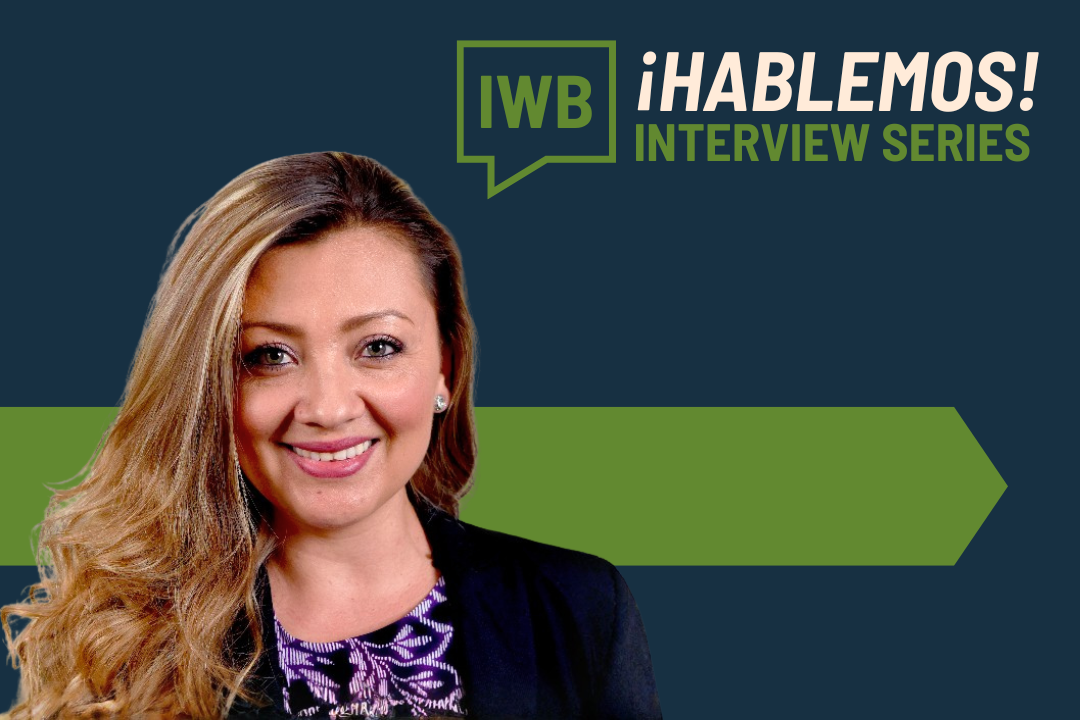
Dr. Emir Estrada is an Associate Professor of Sociology at the School of Human Evolution & Social Change at Arizona State University. She is a qualitative immigration scholar interested in the migration and incorporation aspects of immigrants from Latin America. Her research interests in immigration and gender are influenced in great part by her own immigration experience.
Her award-winning book, Kids At Work: Latinx Families Selling Food on the Streets of Los Angeles, was the first book in the United States that focused on kids and families in the informal economy and street-vending business. Her second book, The Heart of Mentorship, which focuses on the importance of mentorship in academia and its impact on her own work will be released in October 2026.
Dr. Estrada is a Scholar Affiliate of the Im/migrant Well-Being Scholar Collaborative (“The Collaborative”). Rick Tzompa Chimal interviewed Dr. Estrada in March 2026 to discuss her research through her sociocultural focus on im/migrant groups and communities, her recent scholarship, and the future of her research.
Understanding why Sociology Matters
There can be misconceptions about what the field of sociology entails and why it matters. Dr. Estrada sees her field as a tool to learn how people are connected to society and how these connections impact our decisions. She argues that sociology allows us to understand how “individuals and groups of people impact society and the agency they have” while also helping us unpack how society both “constrains and enables individuals like us and how it limits or offers opportunities that we take for granted.”
In her research, Dr. Estrada applies a sociological perspective to understand the “role of children in the informal economy” beyond a normative judgement of whether it should or should not happen. Using this lens, she can explore what causes children to work in the first place and the “social structures that are creating these opportunities or the need for the children to be involved.” Being able to zoom out and use the critical and analytical tools provided by sociology opens the door to learn about the dynamics within these populations.
The Realities of Kids Who Work
Dr. Estrada worked with children and families in Los Angeles who participated in the informal work economy as street vendors selling traditional Mexican tamales, champurrados, and raspados. The question at the center of this research was what role children play in this dynamic and how they contribute to their families.
In her approach to meeting and working with these families, Dr. Estrada had to rethink her strategy as to how she could connect with individuals who saw her as a stranger. She used less intimidating language, dressed more casually, and introduced them to her own child, which slowly built trust and allowed her to meet more willing participants and ensured her book held a “child-centered” perspective.
Dr. Estrada found that children were “integral and important decision makers of where and how to sell” because of their “unique resources they shared with their families.” She observed that these kids “spoke English, were U.S. citizens, and were familiar with popular culture and technology.” As English speakers, they bridge the gap between their Spanish-speaking parents and new English-speaking customers who came from a wider “foodie culture” in Los Angeles. Dr. Estrada shared that she was initially surprised that the street vendors she interviewed were so “high-tech,” but discovered it was in large part because of their children’s skills. Being savvy with technology, their children were also able to use social media like Facebook to promote the business and use apps like Venmo to facilitate payments.
Additionally, because most of these children were U.S. citizens, they took on an additional role protecting their parents from going outside if they saw a police officer, because the children do not face the same threat of deportation. This is a double-edged sword, however, because their citizenship offered them “an extra layer of protection,” but also created the “burden of protecting their parents” against immigration enforcement.
The Importance of Mentorship
Dr. Estrada’s most recent project was inspired by her own mentor, Dr. Pierrette Hondagneu-Sotelo, a now-retired writer, researcher, and professor at the University of Southern California. Her forthcoming book, The Heart of Mentorship, co-authored with Hondagneu-Sotelo and two other scholars, Veronica Montes and Fatima Suarez, details their experiences with mentorship and the need for relationship building in academia.
Dr. Estrada believes that everyone should have a mentor because that mentor-mentee relationship is so important to one’s development and community-building. She shares that “she would not be where she is now if it were not for people who believed in her along the way.” To sum up the characteristics of a productive mentor-mentee relationship, Dr. Estrada and her co-authors developed the acronym, UNICIDAD, uniqueness.
Understanding – being interested instead of interesting when learning about new topics.
Networking – sharing so that everyone can build their own networks.
Inspire – the “belief work” necessary for mentors to uplift the ability of their mentees.
Character – managing academic ego to be a good role model for students.
Interaction – spending time together outside of academic settings.
Development – the intentionality of one’s support of the mentee and their written work.
Asset-based – the work, experiences, and assets mentors and mentees bring to the table.
Doing – the recognition that while mentorship is unpaid, it can be “paid forward” by mentees becoming mentors for others.
As Dr. Estrada prepares to release this book, she believes that having a mentor in Dr. Pierrette Hondagneu-Sotelo and others in her professional career guided her work and personal development. She believes that mentorship is so important because it “paves the way for us to understand how the system works.”
Using Repujado Art to Jumpstart a Scholarship for Students
Dr. Estrada’s childhood dream was to be a graphic designer and create art for a living. She spent time in her childhood painting and eventually learned how to make repujado, a pushed and pressed metal art style that shows the outline of figures. To help with her undergraduate school costs, she began selling her pieces, which deepened her interest in art.
In her professional career, Dr. Estrada continued to make repujados and create a scholarship fund for those who are undocumented or DACA-mented, and who are street-vendors. This fund is in partnership with the Federation of Zacatecas of Los Angeles and is inclusive of all who identify with these traits. She finds that supporting these individuals helps strengthen their economic well-being by receiving some financial respite from economic pressures, like worries about employment opportunities, the DACA renewal process, and the unpredictable street vending market.
Dr. Estrada explains that she does not micromanage the fund because she understands that even a small trip to their homeland can be a source of relief, and she wants these students to have the option to use the funds as needed without restrictions.
Partnering with The Collaborative
Dr. Estrada is thankful for the community of scholars and advocates she has found through the conferences and work with The Collaborative. Through these experiences, she has learned that “being in community” is very important for research on im/migrant well-being. She is thankful to Collaborative co-chairs, Dr. Elizabeth Vaquera and Dr. Elizabeth Aranda, for being role models and inspiring her to embrace “the bravery to be in this academic space to advocate for one another.”
As a Scholar Affiliate of The Collaborative, Dr. Estrada has learned to turn her publications and work into impact for policymaking, by prioritizing policy briefs and turning her scholarship into action that can bring her participants’ experiences to Congress. She values the lessons from The Collaborative to translate her research into accessible formats that can be understood by a general audience and is happy to share this space with “other leaders involved in this shared mission.”
Thank you for reading IWB ¡Hablemos!, an interview series that explores the multifaceted nature of immigration studies, advocacy, partnership, and more. Interested in being featured? Email us at admin@iwbcollab.org.