
By Sophia Benavente and Thomas J. Rachko, Jr.
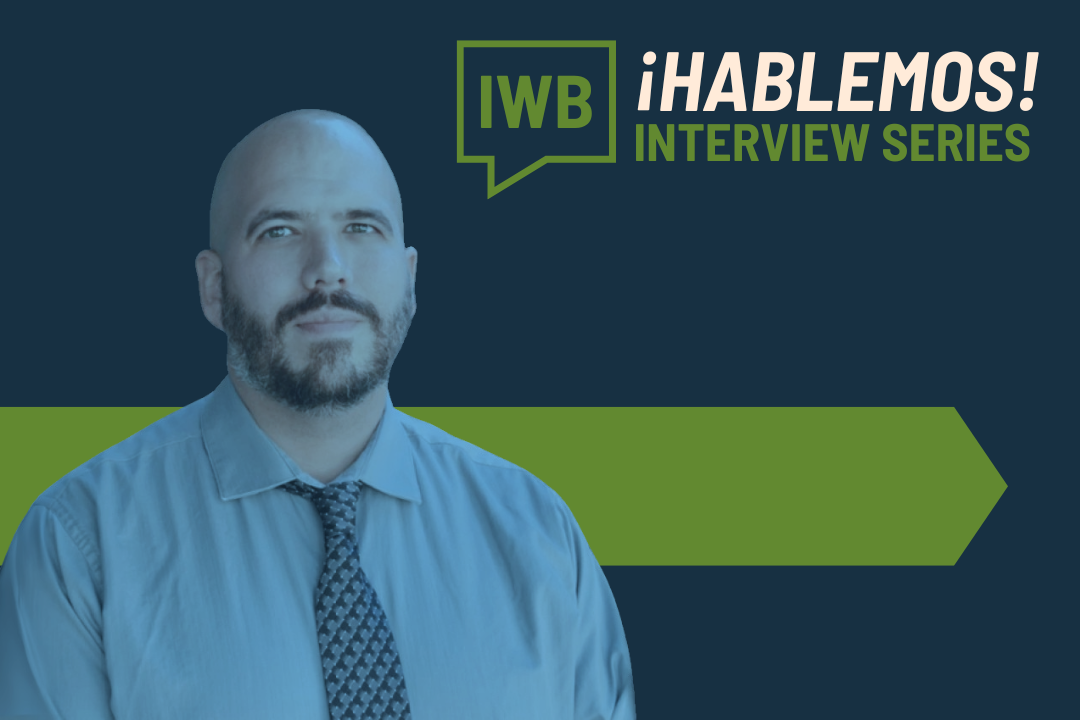
Dr. Daniel E. Martínez, Distinguished Scholar & Associate Professor in the School of Sociology at the University of Arizona and Co-Director of the Binational Migration Institute in the Department of Mexican American Studies, examines race, ethnicity, immigration, and criminology. He has also conducted extensive research into deportations and the deaths of undocumented migrant border crossers at the United States-Mexico border.
In Fall 2024, Dr. Martínez served as the co-editor of a special issue journal published in the Journal on Migration and Human Security devoted to research on the important issue of migrant deaths at the border. Demonstrating his commitment to publicly engaged scholarship, he made the research accessible to the public by breaking it down into a series of one-pagers, giving public presentations, and co-authoring an op-ed published in Social Science Space about the special issue.
Dr. Martínez is also a Scholar Affiliate of the Im/migrant Well-Being Scholar Collaborative (“the Collaborative”) and has been a key contributor to the Collaborative’s conference “Im/migrant Well-Being: A Nexus for Research & Policy.” The Collaborative interviewed Dr. Martínez in August 2025 to discuss his approach to research, border policy, mentoring the next generation of scholars, and what’s next for his scholarship.
Mexican Roots and a Scholar’s Purpose
“I came to the United States as a child and grew up in rural Minnesota, where my family experienced discrimination and anti-immigrant sentiment,” shares Dr. Martínez as he reflected on how his childhood brought him to see the world around him. “Being one of the few Mexican American kids in town shaped how I saw the world.” He also witnessed shifting demographics as more immigrants moved to the state, becoming an integral part of the community.
Early experiences with discrimination and anti-immigrant sentiments contributed to his interest in studying migration: “Those experiences led me to study migration more broadly and to commit to producing research that advances inclusive social change.”
“I consider myself a Chicano social scientist who uses rigorous methods but is committed to making findings accessible beyond academia,” Dr. Martínez told the Collaborative, remarking on his view of the purpose of academic research. For decades, he has sought to put a human face on policies around immigration and migration.
How U.S. Border Policy Produces Risks and Harm: ‘Prevention Through Deterrence’ and ‘Manufactured Desolation’ Across Indigenous Lands
Much of Dr. Martínez’s scholarly work has focused on the impacts of U.S. border policies. Numerous laws and policies over the last three decades have shaped the U.S. strategy at the border. During the 1990s, the U.S. began to embrace an overarching “Prevention Through Deterrence” (PTD) approach at the U.S.-Mexico border. This approach increased enforcement, made border crossings more dangerous, and led to the construction of the border wall. It also funded more security personnel, border militarization, and surveillance.
As Dr. Martínez explains, research on this strategy shows, “Enforcement didn’t deter migration: it redirected it—and too often into deadly terrain.” From his perch in Arizona, he has seen the impacts of PTD firsthand, as he notes, “In southern Arizona, we saw how more checkpoints and more agents pushed migrants away from urban corridors and into increasingly remote areas, including Indigenous lands along the border.”
“The state has cultivated remoteness—what we call ‘manufactured desolation’—by channeling people into areas humanitarian groups and the public can’t easily access,” speaking about the efforts of organizations like Humane Borders, No More Deaths, and Border Angels to assist migrants. “This is one piece of a larger puzzle showing how enforcement strategies produce mortality and disappearance rather than prevent migration,” says Dr. Martínez.
“Geography isn’t just a backdrop—it structures risk, access, and the stories we tell about communities,” when researching immigration and migration policies. Dr. Martínez argues that a critical analysis of geography shapes understandings of impacts to im/migrant well-being and he instills these lessons as he teaches and mentors the next generation of scholars.
Mentorship, Building Community, and Supporting the Next Generation
While previously at The George Washington University, Dr. Martínez was the inaugural director of the Cisneros Hispanic Leadership Institute, an academic research institute devoted to supporting Latino students’ leadership development and rigorous research on the impacts of immigration. Dr. Martínez set the tone at the Institute, establishing a strong foundation as the Cisneros Institute now celebrates its 10-year anniversary under the helm of professional colleague and Collaborative Co-Founder, Dr. Elizabeth Vaquera.
He characterizes his work with students as the “best part of my job.” In describing his role as a mentor and his desire to pay it forward, he looks back to his own mentors and shares, “I benefited from incredible mentors—faculty in Chicano Studies like the late Steve Casanova and colleagues like Raquel Rubio-Goldsmith—and I try to pay that forward.”
“It’s exciting to see younger generations master new tools, from mapping to data visualization, and push projects further than my generation could,” said Dr. Martínez.
Publicly Engaged Scholarship: Returning Knowledge to Communities
“There’s no single definition of public social science, but I believe our conclusions should be accessible to the people most impacted,” emphasized Dr. Martínez. “A fair critique of academia is that we extract knowledge and fail to return it. I try to close that loop—through op-eds, public symposia in community spaces, and clear, colloquial language.”
He put this into action with the publication of the Journal on Migration and Human Security special issue. “When we co-edited the special issue on migrant deaths, we also wrote an op-ed and created one-page summaries so policymakers, advocates, and the public could use the findings,” said Dr. Martínez in describing his approach to return knowledge to communities. He believes that accessibility is key.
Dr. Martínez shares his message for academics doing research on immigration under a challenging policy climate: “Keep doing rigorous, empirical, accessible work. Protect yourself, but don’t be intimidated.”
Looking Ahead: Centering Human Dignity and Empirically-Informed Policy
So, what’s next for the decorated, award-winning scholar?
He continues to build on the foundational work laid with the special issue on migrant deaths: “I’m working with medical examiners to deepen our understanding of migrant deaths and their broader social impacts—what it means for the hikers, hunters, and community members who encounter remains.”
He also never loses sight of his roots, “I’ll continue work on Latinidad, identity, panethnicity, and the racialization and criminalization of Mexicans and Latinos in the United States.”
While working on an issue as challenging as immigration policy and migrant deaths, he holds hope for a better future, “My hope is for a future where policy prioritizes human life and dignity, where communities have the tools to protect each other, and where our research helps make that future possible.”
Thank you for reading IWB ¡Hablemos!, a brand-new interview series that explores the multifaceted nature of immigration studies, advocacy, partnership, and more. Interested in being featured? Email us at admin@iwbcollab.org.